



Keynotes
Keynote presentation
by Claude Crépeau, École de technologie supérieure, Canada
Closing the Generative AI-IC Design Loop: from Tokens to Transistors and Back
by Vladimir Milovanović, University of Kragujevac, Serbia
Keynote presentation
by Gordon Harling, CEO, CMC Microsystems, Canada
From Sensing to Decision Support: HW & SW developments to handle complex real-life situations
by Cornelis, Business Line Director, Teledyne Digital Imaging, Canada
 Keynote presentation
Claude Crépeau, École de technologie supérieure, Canada
— Biography — Claude Crépeau received a Ph.D. from MIT in 1990. He later was a postdoc at the Université Paris-Sud and has been a CNRS researcher at the École Normale Supérieure, Paris, from 1991 to 2005. He has been an Associate Professor at the Université de Montréal from 1995 to 1998 and is an Associate Professor at McGill University since 1998. He moved to École de technologie Supérieure in January 2025 where he is now Full Professor. In 2013, he was elected a Fellow of the International Association for Cryptologic Research. In 2023, he received the E.H. Dijkstra prize for Distributed Computing. In 2024 he was awarded a (5-year) INRIA International chair and an MEIE (Québec) chair for his research in quantum computing. Since 2025, he is the scientific director of INTRIQ. Claude has worked extensively at the design of cryptographic protocols, including Zero-knowledge protocols, and Multiparty Computations. His major contribution has been to offer alternative assumptions under which such protocols may be implemented using noisy channels and quantum channels. In 1993, together with five international colleagues, he published a paper introducing the new concept of “quantum teleportation”. The future the “quantum internet” is going to be based on quantum teleportation. His latest research has led to a practical implementation of zero-knowledge proofs where soundness is guaranteed by Special Relativity.
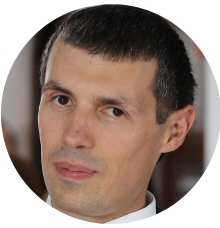 Closing the Generative AI-IC Design Loop: from Tokens to Transistors and Back
Vladimir Milovanović, University of Kragujevac, Serbia
— Abstract — Vladimir Milovanović received the Dipl.-Ing. degree in Electrical Engineering from the University of Belgrade, Belgrade, Serbia, in 2005, and the Ph.D. degree from Delft University of Technology, Delft, the Netherlands, in 2010. Since the beginning of 2014, he has been working as a postdoctoral scholar with the University of California, Berkeley. Before joining Berkeley Wireless Research Center, from 2011 he was with Vienna University of Technology, Vienna, Austria, as a postdoctoral research fellow. Currently, he is a professor with the Department of Electrical Engineering and Computer Sciences at the Faculty of Engineering, University of Kragujevac, Serbia, where he also serves as managing director of the Center for Integrated Systems. Dr. Milovanović has held advisory, consulting, or visiting positions with Texas Instruments, NXP Semiconductors, Infineon Technologies, Sony, and Broadcom. He is the founder and the CTO of a start-up company. His research focuses and interests include design, modeling, and optimization of analog, mixed-signal, and digital integrated circuits and systems, along with the development and implementation of efficient artificial intelligence and signal processing algorithms. Prof. Milovanović is the recipient of the Best Student Paper Award at the 2009 IEEE Bipolar/BiCMOS Circuits and Technology Meeting and the Best Paper Awards at the 2014 IEEE International Conference on Microelectronics.
— Biography — Generative artificial intelligence (AI) has already reshaped software development, yet its impact on integrated circuit (IC) design flows remains modest. Meanwhile, chips, particularly GPUs, are the primary workforce behind LLM-based chatbots, but the demand for more computational power, and especially more efficient computation, is growing rapidly. This keynote explores the bidirectional frontier between AI and ICs. On one side it is advocating a shift towards the so-called AI-friendly circuits, i.e., favoring digitally intensive and, where feasible, even fully synthesizable implementations of traditionally analog functions. Such architectures expose regular, learnable structures, machine-checkable specifications, and richer, more easily curated design corpora that LLMs can interpret, reason about, verify, optimize, and digest more reliably than conventional schematic-and-layout workflow entries. In the reverse direction, the talk will examine compute and energy bottlenecks of transformer models, promoting the near-term solutions with dedicated “tokens-in/tokens-out” accelerators that collapse the transformer pipelines into streaming datapaths with tight memory locality, improving energy efficiency, latency, and scalability. In conclusion, foresight on mutual AI-IC and IC-AI interplay will be given: AI accelerates design closures, reducing the NRE cost, whereas purpose-built hard-wired custom silicon hopefully sustains the next orders of magnitude in model capability on the road toward reaching the AGI goal.
 Keynote presentation
Gordon Harling, CEO, CMC Microsystems, Canada
— Biography — Gordon Harling received a Bachelor’s degree in Applied Science from the University of Toronto and a Maitrise en Ingenierie Physique from the Ecole Polytechnique de Montreal. He has worked in Research and Development at large companies such as Mitel, NovAtel, and DALSA. He has been a founder and CEO of several start-up companies including Goal Semiconductor, Elliptic Technologies, and Innotime Technologies. Since 2018 he is CEO of CMC Microsystems, a not-for-profit which provides software, fabrication access, and technical services to over 10 000 academic researchers and students in Canada, the USA, and Mexico and to over 30 small and medium enterprises. CMC’s focus is to enable the design and manufacture of hardware for microelectronics, photonics, mechanical sensors (MEMS), quantum devices, and AIoT.
 From Sensing to Decision Support: HW & SW developments to handle complex real-life situations
Cornelis, Business Line Director, Teledyne Digital Imaging, Canada
— Abstract — Teledyne Technologies is a sensing and decision support company, which is active in several markets, including Health care, Space, Infrastructure, Inspection and Safety & Security. Several applications in these markets will be discussed in terms of sensing and the various levels of decision support that is required. Decision support related to imaging is highly dependent on AI for object detection, identification and characterization. Applications like Condition Monitoring, Early Fire Detection, Traffic and Perimeter Security are relying on AI to reduce the cognitive load of observers, distribute knowledge, and manage evermore complex systems. Trends to improve the performance in terms of classification in complex situations, continuous tracking and faster learning will be addressed. Hardware trends to bring decision support closer to the sensor provide latency and speed benefits but require good understanding of the applications. The pairing of MEMS sensors to advanced CMOS will be addressed, and the importance of initiatives like the C2MI to create an eco-system connecting Governments, Academia, Start-ups and larger technology companies.
— Biography — Cornelis (Cees) Draijer BBA, M.Sc., Ph.D. started his career at Philips Research Labs in Eindhoven, The Netherlands, as a Research Scientist and continued as a Program Manager and Design lead for the development of Charge Coupled Devices (CCDs) Imagers. Later he worked on the early development stages of the development of CMOS based Medical X-Ray panels in 2002 at DALSA, a Canadian based imaging company. He immigrated to Canada in 2007 and initiated the development of microbolometers in 2012, in close cooperation with the DALSA MEMS foundry and the Collaborative Center for Micro Innovation or C2MI in Bromont, QC. This led to a business line which he led till 2024. Since then, he became CTO of the Teledyne FLIR Solutions Business Unit, out of the Stockholm area in Sweden. Also in 2024, he became Vice President of Technology for the Teledyne Digital imaging segment. Main responsibilities in this role are technology and capability roadmap development and growth strategy development. The Digital Imaging segment represents about 50% of Teledyne’s revenue and includes the Teledyne MEMS foundry businesses. In recent years he worked closely with Teledyne MEMS management to initiate new technology developments to support Teledyne businesses in the future. More recently, he got involved in a Teledyne corporate initiative to apply the breadth of Teledyne sensing and decision support technologies to the field of Mining, Oil & Gas, Renewable Energy and Utilities. Since March 2025 he is a board member of the C2MI.